

The photosynthesis reactionSpec 6.2
Photosynthesis in plants and algae is an endothermic reaction. This means it takes in energy from the surroundings. The energy comes from light, which is absorbed by the green pigment chlorophyll in the chloroplasts.
The light energy is used to react carbon dioxide and water to produce glucose and oxygen.
carbon dioxide + water → glucose + oxygen (in the presence of light)
6CO₂ + 6H₂O → C₆H₁₂O₆ + 6O₂
| Substance | Reactant or product | Source or fate |
|---|---|---|
| Carbon dioxide | Reactant | Diffuses into the leaf from the air |
| Water | Reactant | Absorbed from the soil by the roots and carried to the leaf in the xylem |
| Glucose | Product | Used for respiration, or to build new plant material (biomass) |
| Oxygen | Product | Diffuses out of the leaf into the air |
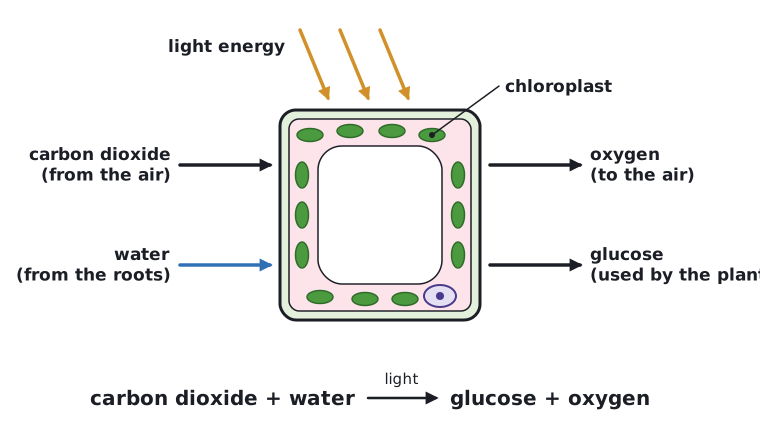 Tap to enlarge