

SynapsesSpec 2.13
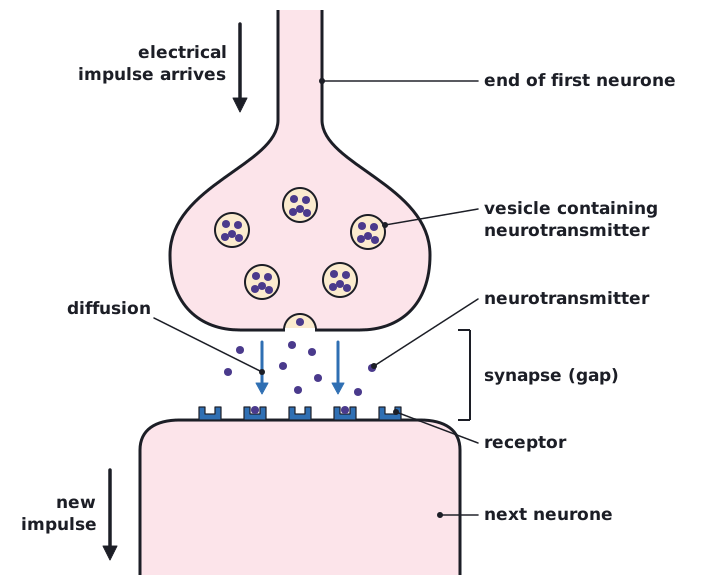
A synapse is a gap between two neurones. The electrical impulse cannot cross the gap, so a chemical is used instead.
- An electrical impulse arrives at the end of the first neurone.
- The neurone releases a chemical called a neurotransmitter into the synapse.
- The neurotransmitter diffuses across the gap.
- It binds to receptors on the membrane of the next neurone.
- This triggers a new electrical impulse in the next neurone.
 Tap to enlarge