

Limiting factorsSpec 6.3
A limiting factor is something that is in short supply, so it stops the rate of a process from going any faster. The rate of photosynthesis can be limited by temperature, light intensity and carbon dioxide concentration.
| Factor | Effect on rate | Why |
|---|---|---|
| Light intensity | Rate increases as light intensity increases, then levels off | Light provides the energy for the reaction. At low light, the amount of light limits the rate. At high light, another factor is limiting. |
| Carbon dioxide concentration | Rate increases as concentration increases, then levels off | Carbon dioxide is a reactant. At low concentration, there is not enough of it. At high concentration, another factor is limiting. |
| Temperature | Rate increases up to an optimum temperature, then falls sharply | Photosynthesis is controlled by enzymes. A higher temperature gives more collisions between enzymes and substrates. Above the optimum the enzymes are denatured, so the rate falls. |
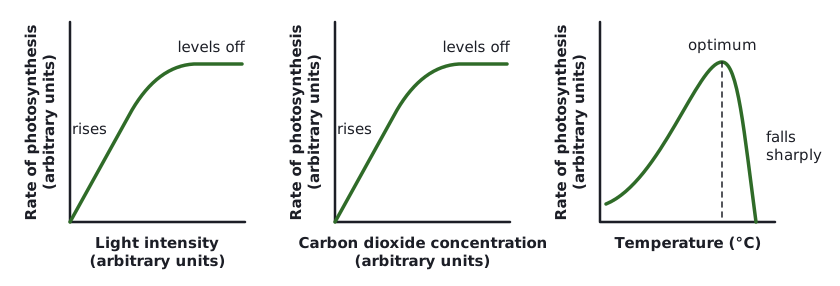 Tap to enlarge
On a graph, the rate rises while the factor on the x-axis is the limiting factor. Where the line goes flat, that factor is no longer limiting and something else is. Reading a graph this way is a common exam question.