

ChromosomesSpec 4.1.2.1
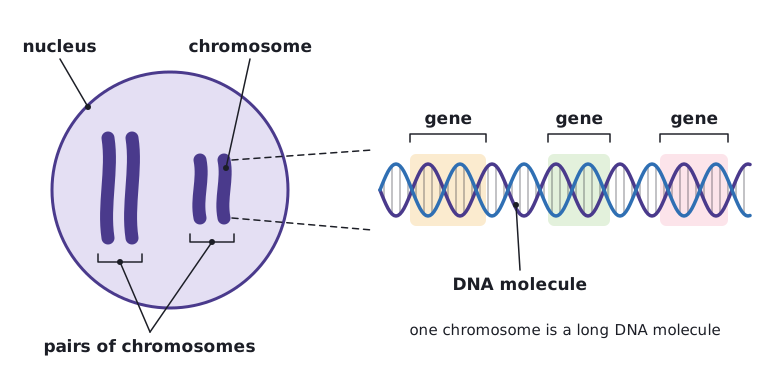
The nucleus of a cell contains chromosomes made of DNA molecules. Each chromosome carries a large number of genes. In body cells the chromosomes are normally found in pairs.
 Tap to enlarge
Mitosis and the cell cycleSpec 4.1.2.2
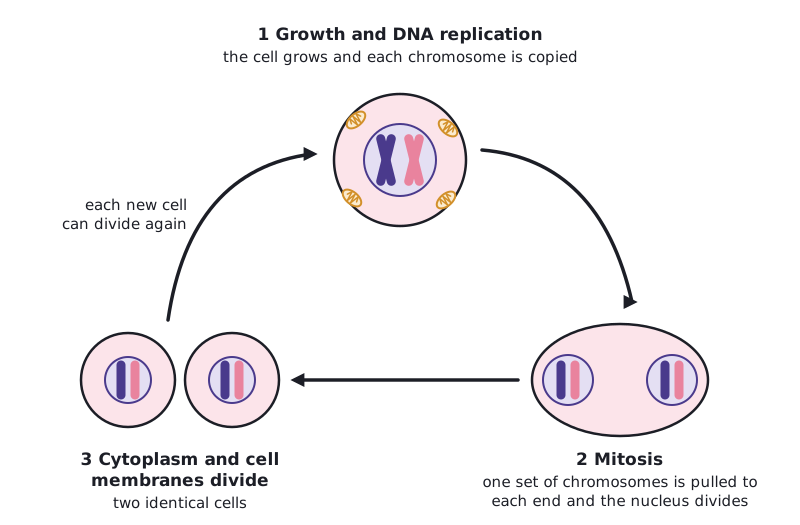
Cells divide in a series of stages called the cell cycle. During the cell cycle the genetic material is doubled and then divided into two identical cells. There are three overall stages.
- Growth and DNA replication. Before a cell can divide it needs to grow and increase the number of sub-cellular structures such as ribosomes and mitochondria. The DNA replicates to form two copies of each chromosome.
- Mitosis. One set of chromosomes is pulled to each end of the cell and the nucleus divides.
- Cytoplasm and cell membranes divide. Finally the cytoplasm and cell membranes divide to form two identical cells.
 Tap to enlarge
You need to understand the three overall stages but you do not need to know the different phases of the mitosis stage.
Cell division by mitosis is important in the growth and development of multicellular organisms. In mature animals, cell division is mainly restricted to repair and replacement.
Recognising mitosis in context
You should be able to recognise and describe situations in given contexts where mitosis is occurring. Look for the production of new, genetically identical cells.
- An embryo or seedling growing in size.
- The tip of a root or shoot lengthening.
- A cut healing, as new skin cells replace the damaged ones.
- Worn out cells being replaced.
Stem cellsSpec 4.1.2.3
- Stem cell
- An undifferentiated cell of an organism which is capable of giving rise to many more cells of the same type, and from which certain other cells can arise from differentiation.
You should be able to describe the function of stem cells in embryos, in adult animals and in the meristems in plants.
| Where | What the stem cells can do |
|---|---|
| Human embryos | Can be cloned and made to differentiate into most different types of human cell |
| Adult bone marrow | Can form many types of cell, including blood cells |
| Plant meristems | Meristem tissue can differentiate into any type of plant cell, throughout the life of the plant |
Knowledge and understanding of stem cell techniques are not required.
Medical uses
Treatment with stem cells may be able to help conditions such as diabetes and paralysis.
In therapeutic cloning an embryo is produced with the same genes as the patient. Stem cells from the embryo are not rejected by the patient's body, so they may be used for medical treatment.
Risks and objections
- There are potential risks, such as transfer of viral infection.
- Some people have ethical or religious objections to the use of stem cells from embryos.
Plant stem cells
Stem cells from meristems in plants can be used to produce clones of plants quickly and economically.
- Rare species can be cloned to protect them from extinction.
- Crop plants with special features such as disease resistance can be cloned to produce large numbers of identical plants for farmers.
Quick check
What are chromosomes made of, and where are they found?
Show answer
DNA molecules, in the nucleus.
Name the three overall stages of the cell cycle.
Show answer
Growth and DNA replication; mitosis; division of the cytoplasm and cell membranes.
What does mitosis produce?
Show answer
Two genetically identical cells.
Why are stem cells from therapeutic cloning not rejected?
Show answer
The embryo has the same genes as the patient.
Where are stem cells found in plants?
Show answer
In meristems, throughout the life of the plant.