

Mitosis and the cell cycleSpec 4.1.2.2
Cells divide in a series of stages called the cell cycle. During the cell cycle the genetic material is doubled and then divided into two identical cells. There are three overall stages.
- Growth and DNA replication. Before a cell can divide it needs to grow and increase the number of sub-cellular structures such as ribosomes and mitochondria. The DNA replicates to form two copies of each chromosome.
- Mitosis. One set of chromosomes is pulled to each end of the cell and the nucleus divides.
- Cytoplasm and cell membranes divide. Finally the cytoplasm and cell membranes divide to form two identical cells.
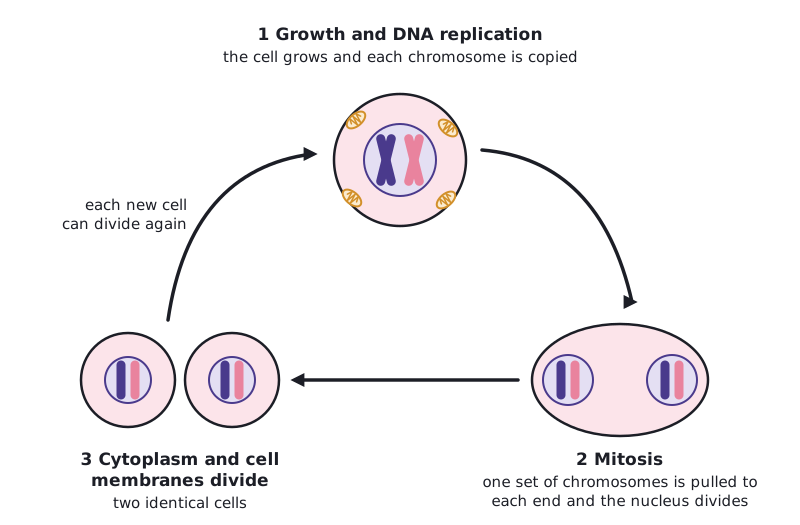 Tap to enlarge
You need to understand the three overall stages but you do not need to know the different phases of the mitosis stage.
Cell division by mitosis is important in the growth and development of multicellular organisms. In mature animals, cell division is mainly restricted to repair and replacement.
Recognising mitosis in context
You should be able to recognise and describe situations in given contexts where mitosis is occurring. Look for the production of new, genetically identical cells.
- An embryo or seedling growing in size.
- The tip of a root or shoot lengthening.
- A cut healing, as new skin cells replace the damaged ones.
- Worn out cells being replaced.