

Genetic engineeringSpec 4.6.2.4
- Genetic engineering
- A process which involves modifying the genome of an organism by introducing a gene from another organism to give a desired characteristic.
In genetic engineering, genes from the chromosomes of humans and other organisms can be 'cut out' and transferred to cells of other organisms.
- Plant crops have been genetically engineered to be resistant to diseases or to produce bigger, better fruits.
- Bacterial cells have been genetically engineered to produce useful substances such as human insulin to treat diabetes.
Crops that have had their genes modified in this way are called genetically modified (GM) crops. GM crops include ones that are resistant to insect attack or to herbicides. GM crops generally show increased yields.
Benefits, risks and objections
| Potential benefits | Potential risks and objections | |
|---|---|---|
| Agriculture | Increased yields; resistance to insects, herbicides or disease; bigger, better fruits | Effects on populations of wild flowers and insects; some people feel the effects of eating GM crops on human health have not been fully explored |
| Medicine | Bacteria can make useful substances such as human insulin; research is exploring genetic modification to overcome some inherited disorders | Some people object to altering the genes of organisms, especially humans; long-term effects may not be known |
Some people have objections to genetic engineering, even though it has huge potential benefits.
The main steps in genetic engineering
- Enzymes are used to isolate the required gene.
- The gene is inserted into a vector, usually a bacterial plasmid or a virus.
- The vector is used to insert the gene into the required cells.
- Genes are transferred to the cells of animals, plants or microorganisms at an early stage in their development, so that they develop with the desired characteristics.
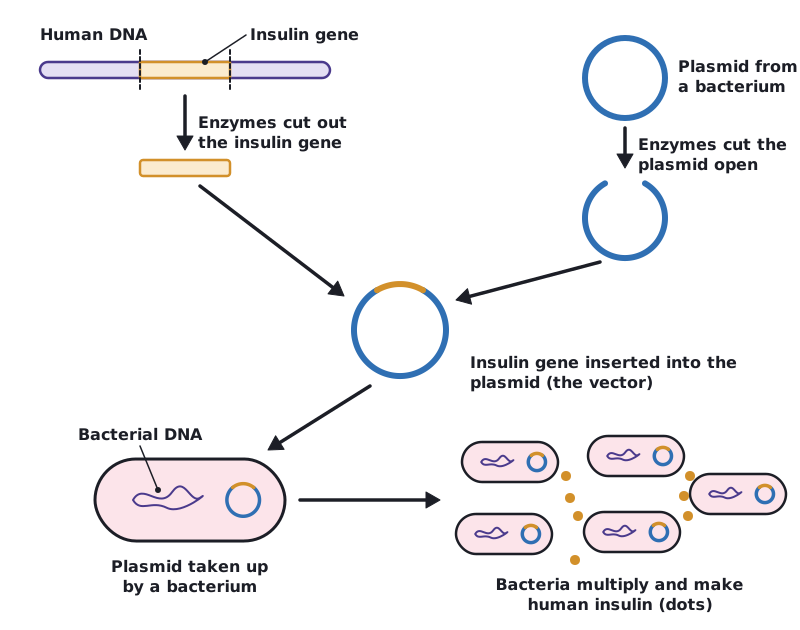 Tap to enlarge
Quick check
Give the three possible causes of variation.
Show answer
Genetic causes, environmental causes, or a combination of genes and the environment.
What do all variants arise from?
Show answer
Mutations.
When have two populations become two new species?
Show answer
When they are so different in phenotype that they can no longer interbreed to produce fertile offspring.
Name one problem caused by selective breeding.
Show answer
Inbreeding, where some breeds are prone to disease or inherited defects.
What is a GM crop?
Show answer
A crop that has had its genes modified by genetic engineering.