

BloodSpec 4.2.2.3
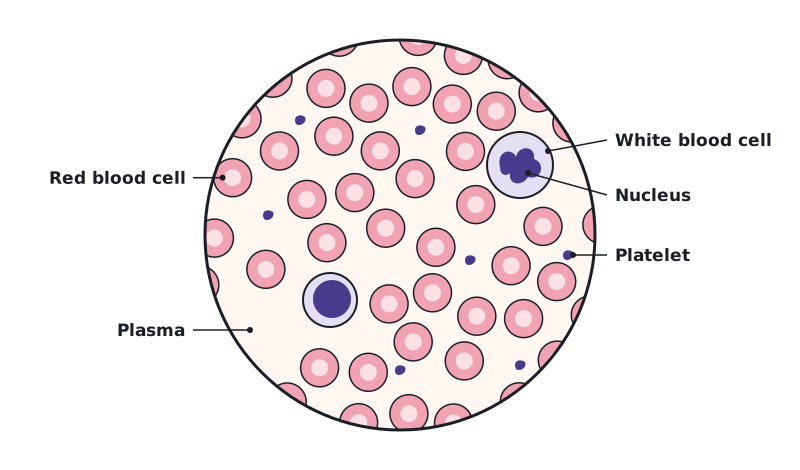
Blood is a tissue consisting of plasma, in which the red blood cells, white blood cells and platelets are suspended.
| Component | Function | Adaptation |
|---|---|---|
| Plasma | Transports carbon dioxide from the organs to the lungs, soluble products of digestion from the small intestine to other organs, and urea from the liver to the kidneys. Also transports hormones | A liquid, so substances dissolve in it |
| Red blood cells | Carry oxygen from the lungs to all the cells of the body | Biconcave disc shape gives a large surface area. No nucleus, so more room for haemoglobin. Contain haemoglobin, which binds to oxygen |
| White blood cells | Defend the body against pathogens. Some engulf pathogens (phagocytosis); others produce antibodies and antitoxins | Have a nucleus. Phagocytes can change shape to engulf pathogens |
| Platelets | Help the blood to clot at a wound | Small fragments of cells with no nucleus |
In the lungs, haemoglobin combines with oxygen to form oxyhaemoglobin. In the body tissues the oxyhaemoglobin releases the oxygen.
Recognising blood cells
You may need to identify cells in a photograph or diagram.
- Red blood cells are the most numerous. They are small, round and have no nucleus, and look paler in the middle.
- White blood cells are larger and have a clear nucleus, often stained dark purple.
- Platelets are tiny fragments, much smaller than the other cells.
Blood products, such as donated blood used in a transfusion, can save lives. There are risks, for example infection can be passed on from the donor, so donated blood has to be checked and matched to the patient.
 Tap to enlarge