

The heart and the double circulatory systemSpec 4.2.2.2
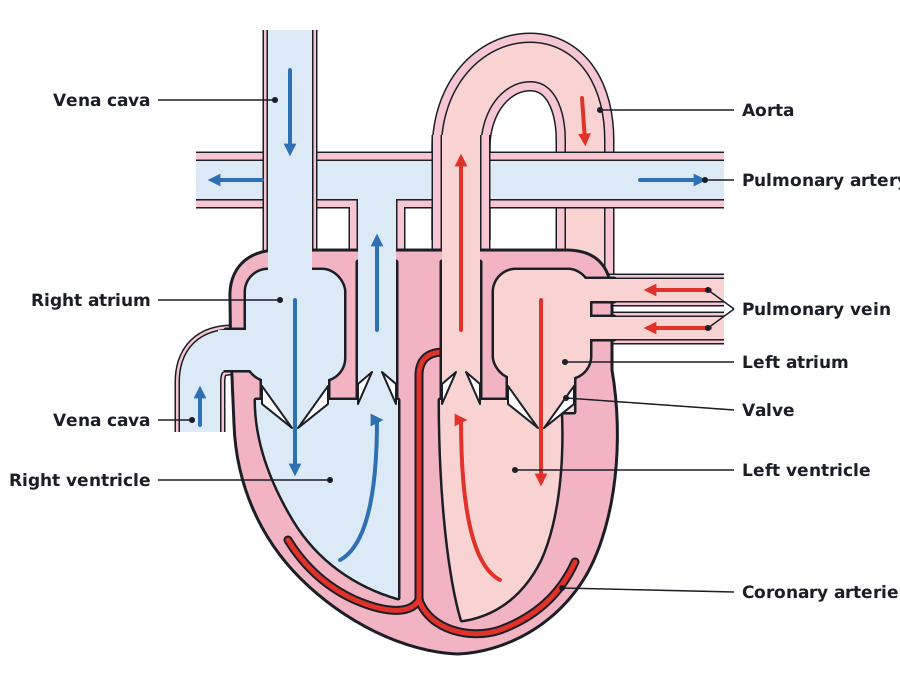
The heart is an organ that pumps blood around the body in a double circulatory system. There are two separate loops, and blood passes through the heart twice on each complete circuit.
- The right ventricle pumps blood to the lungs, where gas exchange takes place.
- The left ventricle pumps blood around the rest of the body.
Blood returns from the body to the right atrium and from the lungs to the left atrium. The ventricles have thick muscular walls. The left ventricle has a thicker wall than the right, because it has to pump blood all the way around the body at a higher pressure. Valves in the heart stop blood flowing backwards. You do not need to know the names of the valves.
| Vessel | Carries blood | Oxygen content |
|---|---|---|
| Vena cava | From the body to the right atrium | Low (deoxygenated) |
| Pulmonary artery | From the right ventricle to the lungs | Low (deoxygenated) |
| Pulmonary vein | From the lungs to the left atrium | High (oxygenated) |
| Aorta | From the left ventricle to the body | High (oxygenated) |
| Coronary arteries | Over the surface of the heart, supplying the heart muscle | High (oxygenated) |
- Deoxygenated blood from the body enters the right atrium through the vena cava.
- It passes into the right ventricle, which pumps it to the lungs through the pulmonary artery.
- In the lungs the blood picks up oxygen and loses carbon dioxide.
- Oxygenated blood returns through the pulmonary vein to the left atrium.
- It passes into the left ventricle, which pumps it around the body through the aorta.
 Tap to enlarge