
Organs of the digestive systemSpec B7.2.1, B7.2.2
In short
The alimentary canal is the long tube that food passes through from mouth to anus, while the salivary glands, pancreas, liver and gall bladder are associated organs that make and store digestive juices. The five processes of nutrition are ingestion, digestion, absorption, assimilation and egestion, the removal of undigested food as faeces.
The alimentary canal is the long tube that food passes through from mouth to anus. The associated organs are not part of the tube, but they make and store the juices that digest food.
- Alimentary canal: mouth, oesophagus, stomach, small intestine (duodenum and ileum) and large intestine (colon, rectum and anus).
- Associated organs: salivary glands, pancreas, liver and gall bladder.
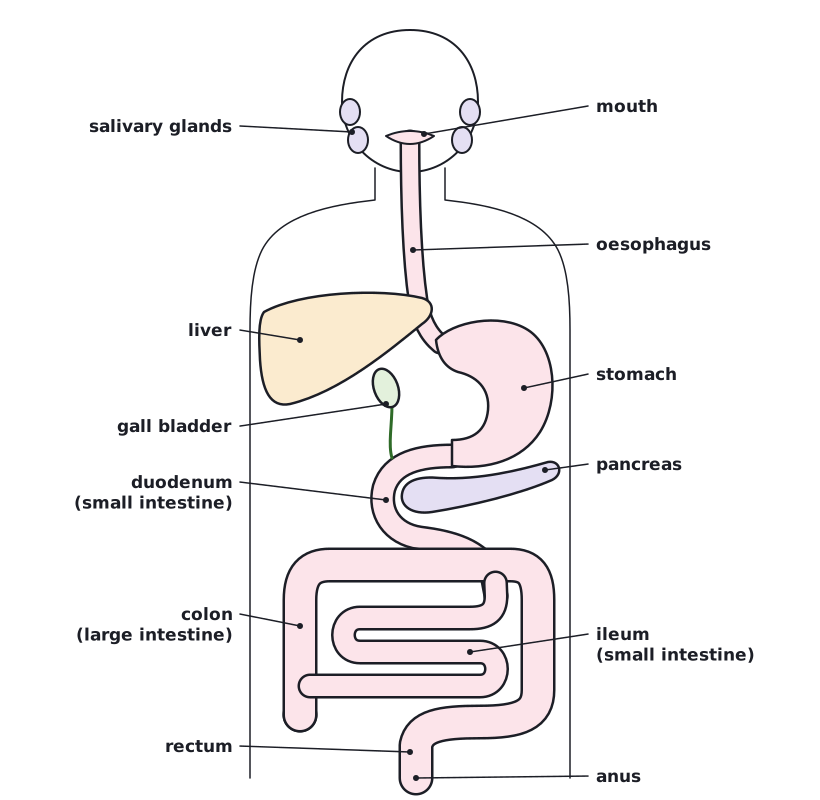 (opens full size in a new tab)
Five processes of nutrition
- Ingestion
- The taking of substances, e.g. food and drink, into the body.
- Digestion
- The breakdown of food.
- Absorption
- The movement of nutrients from the intestines into the blood.
- Assimilation
- Uptake and use of nutrients by cells.
- Egestion
- The removal of undigested food from the body as faeces.
| Organ | Function | Process |
|---|---|---|
| Mouth | Food and drink are taken in; teeth break food up; food mixes with saliva | Ingestion; digestion |
| Salivary glands | Make saliva containing amylase, which starts chemical digestion of starch | Digestion |
| Oesophagus | Carries food from the mouth to the stomach | (moves food along) |
| Stomach | Churns food; makes gastric juice containing protease and hydrochloric acid | Digestion |
| Liver | Makes bile; absorbed nutrients are carried to the liver in the blood, and some are used there, e.g. amino acids to make proteins | Digestion; assimilation |
| Gall bladder | Stores bile and releases it into the duodenum | Digestion |
| Pancreas | Makes enzymes (amylase, protease, lipase) and releases them into the duodenum | Digestion |
| Small intestine: duodenum | Receives bile and pancreatic juice; digestion of food continues | Digestion |
| Small intestine: ileum | Digestion is completed; nutrients and most of the water are absorbed into the blood | Digestion; absorption |
| Large intestine: colon | Absorbs some water from the undigested food | Absorption |
| Rectum | Stores faeces | (before egestion) |
| Anus | Faeces leave the body | Egestion |
Assimilation happens after absorption. The blood carries the absorbed nutrients to the body's cells, which take them up and use them, for example glucose for respiration and amino acids to make proteins.
Egestion is the removal of undigested food as faeces. It is not excretion, and it is not the same as absorption.
Written and checked against the Cambridge IGCSE Combined Science (0653) specification · Updated October 2026