
Investigating light, carbon dioxide and temperatureSpec B6.1.7
In short
The rate of photosynthesis can be measured by counting the oxygen bubbles released by pondweed such as Elodea per minute, or by collecting and measuring the gas. Change light intensity by moving a lamp, carbon dioxide with sodium hydrogencarbonate, or temperature with a water bath, keeping the other factors constant. Collecting the gas is more accurate.
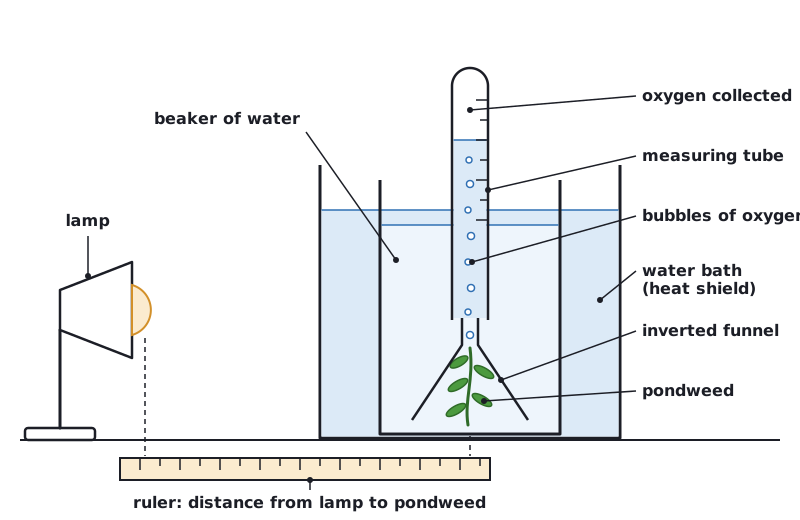
Photosynthesis can be investigated by measuring the rate at which an aquatic plant such as Elodea (pondweed) releases oxygen. Bubbles of oxygen come from the cut end of the stem. Count the bubbles in a set time, or collect the gas and measure its volume.
| Independent variable | How to change it | Keep constant |
|---|---|---|
| Light intensity | Move a lamp to different distances from the plant, measured with a ruler (a closer lamp gives a higher light intensity) | Temperature, carbon dioxide concentration, the same plant |
| Carbon dioxide concentration | Add different amounts of sodium hydrogencarbonate to the water (it releases carbon dioxide) | Light intensity, temperature, the same plant |
| Temperature | Stand the beaker in a water bath at different temperatures and check with a thermometer | Light intensity, carbon dioxide concentration, the same plant |
The dependent variable is the number of bubbles (or the volume of oxygen) produced per minute. Allow the plant to adjust for a few minutes after each change. Repeat each condition at least three times and calculate a mean.
 (opens full size in a new tab)
 (opens full size in a new tab)
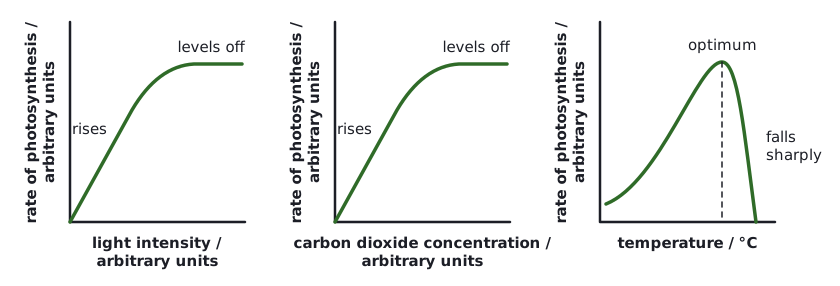
Typical results: as light intensity or carbon dioxide concentration increases, the rate increases and then levels off. As temperature increases, the rate rises to an optimum and then falls as enzymes are denatured.
Calculating a rate
A piece of pondweed releases 24 cm³ of oxygen in 6 minutes. Calculate the rate of photosynthesis in cm³ per minute.
- rate = volume of oxygen ÷ time
- rate = 24 ÷ 6
Answer: 4 cm³ per minute
A lamp heats the water, so control the temperature by placing a beaker of water between the lamp and the plant, or use a cool LED lamp. When describing results, state the trend and quote figures from the table or graph.
Counting bubbles is not very accurate because bubbles differ in size. Collecting and measuring the volume of gas is more accurate.
Written and checked against the Cambridge IGCSE Combined Science (0653) specification · Updated October 2026