
Bacterial cellsSpec B2.1.2, B2.1.3, B2.1.4
In short
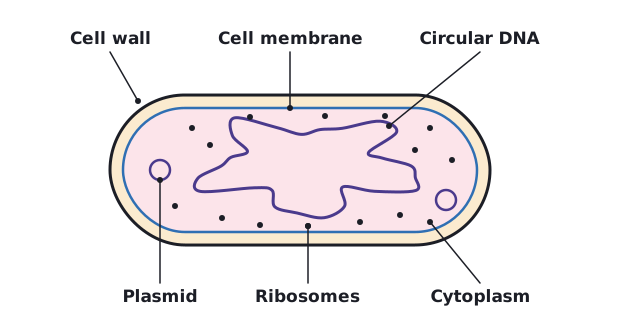
A bacterial cell is a simple cell with a cell wall, cell membrane, cytoplasm and ribosomes but no nucleus. Its genetic material is a single loop of circular DNA lying free in the cytoplasm, and it may also have plasmids, which are small rings of extra DNA. Its cell wall is not made of cellulose.
A bacterial cell is much simpler than a plant or animal cell. It has no nucleus. Its genetic material is a single loop of circular DNA that lies free in the cytoplasm. Bacteria may also have one or more small rings of extra DNA called plasmids.
| Structure | Function |
|---|---|
| Cell wall | Surrounds the cell and gives it strength and shape (not made of cellulose) |
| Cell membrane | Controls the movement of substances into and out of the cell |
| Cytoplasm | Where chemical reactions happen |
| Ribosomes | Make proteins (protein synthesis) |
| Circular DNA | Contains the genetic material; controls the activities of the cell |
| Plasmids | Small rings of extra DNA that carry a few additional genes |
 (opens full size in a new tab)
Write 'circular DNA free in the cytoplasm' rather than 'no DNA'. Bacteria do have DNA. What they lack is a nucleus to hold it.
Written and checked against the Cambridge IGCSE Combined Science (0653) specification · Updated October 2026