
The carbon cycleSpec B15.3.1
In short
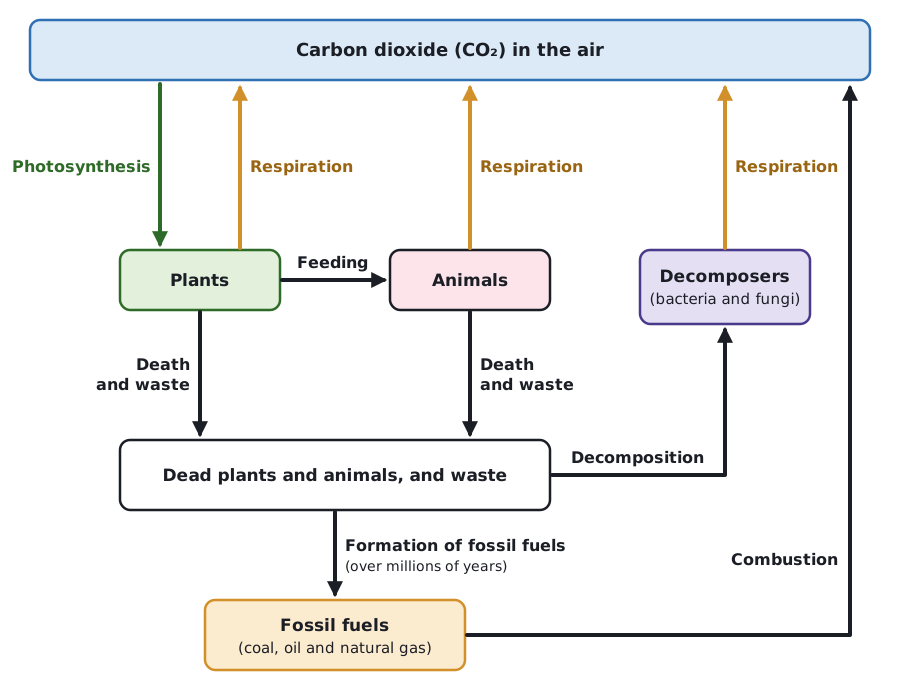
The carbon cycle moves carbon between the air, living organisms, dead material and fossil fuels. Photosynthesis removes carbon dioxide from the air, and feeding passes carbon compounds along food chains. Respiration by plants, animals and decomposers returns carbon dioxide, as does combustion of fossil fuels and wood. Some buried dead organisms form coal, oil and natural gas.
All living things are made of carbon compounds, such as carbohydrates, proteins and fats. The carbon cycle moves carbon between the air, living organisms, dead material and fossil fuels. It makes sure carbon dioxide is available for plants to use in photosynthesis again.
- Plants and algae take carbon dioxide from the air and use it in photosynthesis to make carbon compounds such as glucose, starch and proteins.
- The carbon compounds pass along the food chain by feeding, when animals eat plants and other animals.
- Plants, animals and decomposers all release carbon dioxide into the air by respiration.
- When organisms die, and when they produce waste, decomposers (bacteria and fungi) break down the material. They release carbon dioxide into the air by respiration.
- Over millions of years, some dead organisms are buried and do not decompose fully. They form fossil fuels (coal, oil and natural gas).
- When fossil fuels, wood or other fuels are burned, combustion releases carbon dioxide into the air.
| Process | Effect on carbon dioxide in the air |
|---|---|
| Photosynthesis | Removes carbon dioxide from the air |
| Respiration (plants, animals, decomposers) | Adds carbon dioxide to the air |
| Decomposition | Adds carbon dioxide to the air, because decomposers respire |
| Combustion | Adds carbon dioxide to the air |
| Feeding | Passes carbon compounds from one organism to the next; no change in the air |
| Formation of fossil fuels | Locks carbon away in coal, oil and gas |
 (opens full size in a new tab)
Name the process at every arrow. Photosynthesis takes carbon dioxide in. Respiration, decomposition and combustion put it back. Do not write 'breathing' for respiration.
Quick check
Which process removes carbon dioxide from the air?
Show answer
Photosynthesis.
Name three processes that add carbon dioxide to the air.
Show answer
Respiration, decomposition and combustion.
How are fossil fuels formed?
Show answer
From dead organisms that were buried and did not decompose fully, over millions of years.
Written and checked against the Cambridge IGCSE Combined Science (0653) specification · Updated October 2026