
VirusesSpec B10.1.5
In short
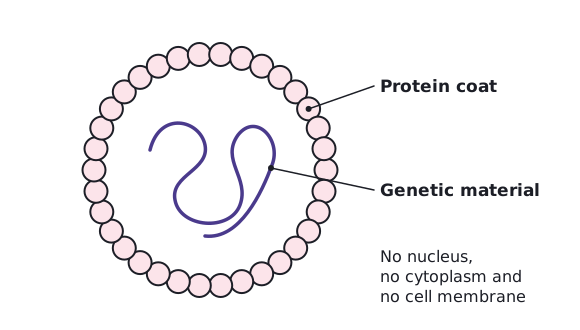
A virus is a particle much smaller than a bacterium that is not made of cells, so it does not fit into the five kingdoms. Its features are limited to two: a protein coat, which surrounds and protects the genetic material, and the genetic material inside it, which carries the instructions for making new viruses.
A virus is much smaller than a bacterium. Viruses are not made of cells, so they do not fit into the five kingdoms. The features of a virus are limited to two: a protein coat and genetic material.
| Part | Description |
|---|---|
| Protein coat | Surrounds and protects the genetic material |
| Genetic material | Carries the instructions for making new viruses; inside the protein coat |
 (opens full size in a new tab)
Do not describe a virus as having a nucleus, cytoplasm or cell membrane. State protein coat and genetic material, and nothing else.
Quick check
Supplement State the two features of a virus.
Show answer
A protein coat and genetic material.
Written and checked against the Cambridge IGCSE Combined Science (0653) specification · Updated October 2026