

AQA GCSE Biology, topic 5
Homeostasis and response
Cells can only survive within narrow limits of temperature, pH, water and dissolved food, so the body constantly monitors and adjusts its internal conditions. This topic covers the nervous system and its fast responses, the hormonal system and its slower, longer-lasting effects, and how hormones control blood glucose, water balance and reproduction. Triple students also study the brain, the eye, body temperature and plant hormones.
Examined in Paper 2 (1 hour 45 minutes, 100 marks).
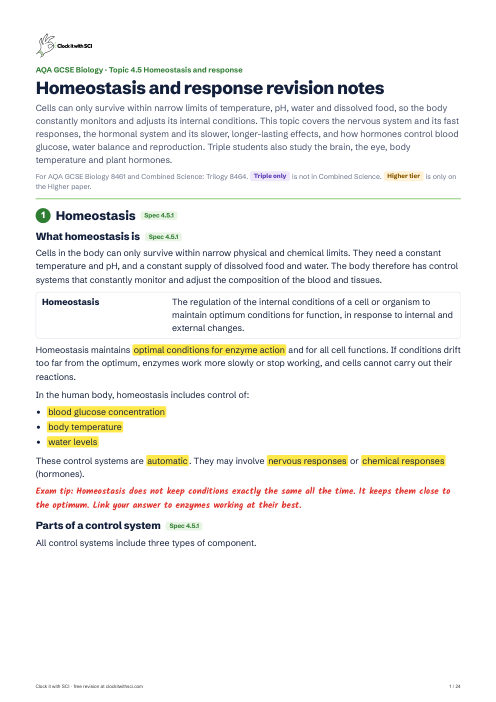 Revision notes
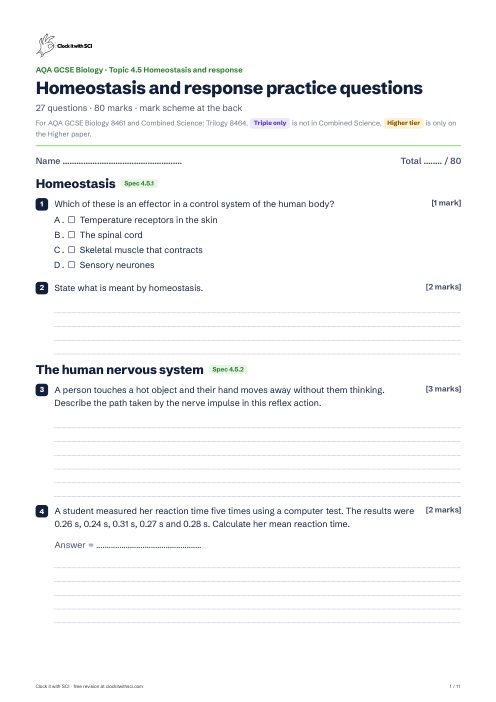 Worksheet
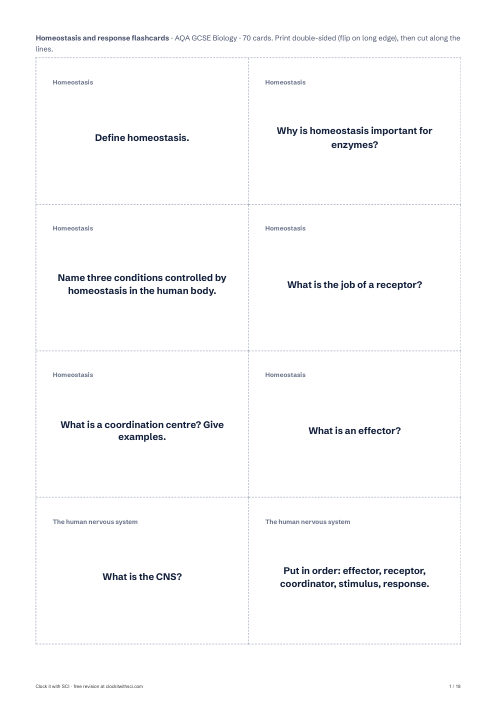 Flashcards
Subtopics
Work through them in order. Each one has notes, exam questions and flashcards, and a PDF of each.
- 1Homeostasis Spec 4.5.1Homeostasis keeps conditions in the body at the optimum for enzymes and cells, using receptors, coordination centres and effectors.NotesQuestions 2Flashcards 6
- 2The human nervous system Spec 4.5.2How neurones, the CNS and reflex arcs give fast responses, plus the brain, the eye and control of body temperature.NotesQuestions 9Flashcards 26
- 3Hormonal coordination in humans Spec 4.5.3The endocrine system, blood glucose and diabetes, water balance, reproductive hormones, contraception, fertility treatment and feedback.NotesQuestions 14Flashcards 30
- 4Plant hormones Triple onlySpec 4.5.4How auxin controls phototropism and gravitropism, plus gibberellins, ethene and the uses of plant hormones by growers.NotesQuestions 2Flashcards 8
Whole topic
When you have done the subtopics: test yourself on everything, or print the lot.