
Edexcel GCSE Combined Science, topic 9
Ecosystems and material cycles
This topic looks at how living things fit together in ecosystems and how to measure what lives where. It also covers the effect humans have on biodiversity, and how carbon, water and nitrogen are cycled between living things and their surroundings.
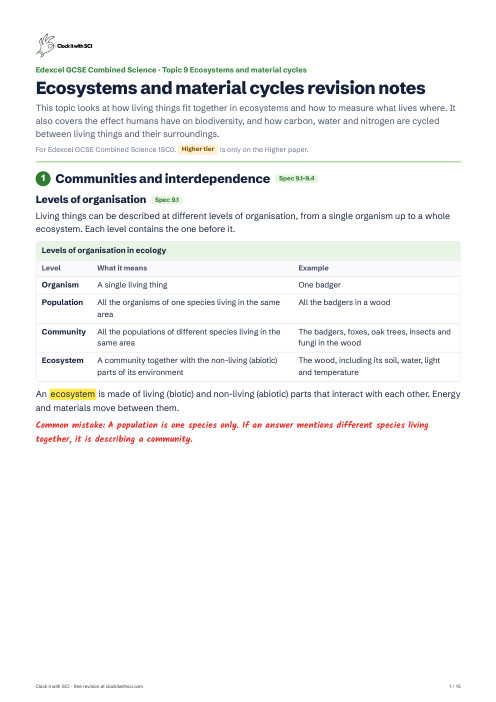 Revision notes
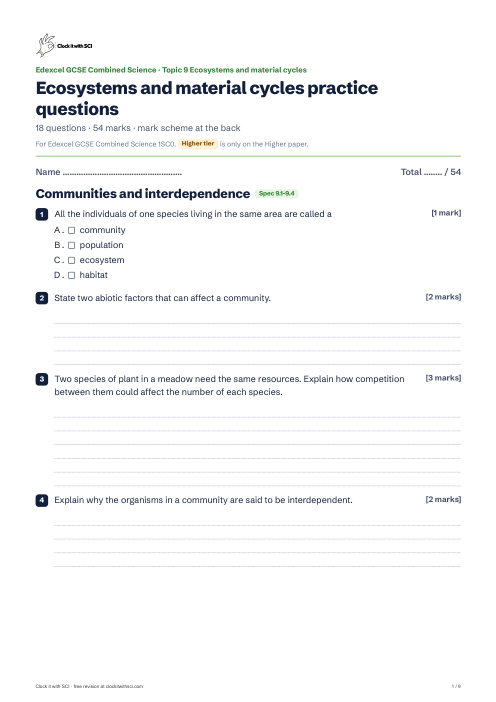 Worksheet
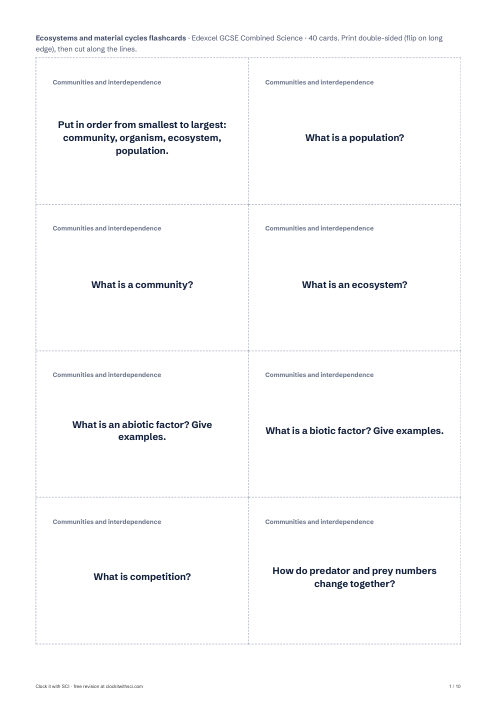 Flashcards
Subtopics
Work through them in order. Each one has notes, exam questions and flashcards, and a PDF of each. Triple-only subtopics are left out.
- 1Communities and interdependence Spec 9.1–9.4Levels of organisation in an ecosystem, abiotic and biotic factors, interdependence, parasitism and mutualism.NotesQuestions 5Flashcards 12
- 2Fieldwork and sampling Spec 9.5–9.6Core practical using quadrats and belt transects, and how to estimate the number of organisms in an area from raw data.NotesQuestions 3Flashcards 7
- 3Human impacts, biodiversity and food security Spec 9.9–9.11BFish farming, non-indigenous species and eutrophication, and the benefits of maintaining biodiversity, including conservation and reforestation.NotesQuestions 4Flashcards 8
- 4Material cycles Spec 9.12–9.15How materials cycle through ecosystems, with the carbon, water and nitrogen cycles, decomposers, desalination, fertilisers and crop rotation.NotesQuestions 6Flashcards 13
Not in Combined Science: Energy transfer in ecosystems, Indicator species and decomposition.
Whole topic
When you have done the subtopics: test yourself on everything, or print the lot.