

From base order to protein shapeSpec 3.7B
A gene is a section of DNA that codes for a specific protein. Proteins are made of chains of amino acids. The order of bases in a section of DNA decides the order of amino acids in the protein.
- The sequence of bases in the gene decides the order of amino acids.
- The chain of amino acids folds up.
- The way the chain folds depends on the order of the amino acids, so it produces a specifically shaped protein.
The shape of a protein matters because it decides what the protein can do. For example, an enzyme has an active site with a shape that fits its substrate. A different order of bases would give a different order of amino acids, a differently folded protein and so a different shape.
Protein synthesis: transcription and translationSpec 3.8B
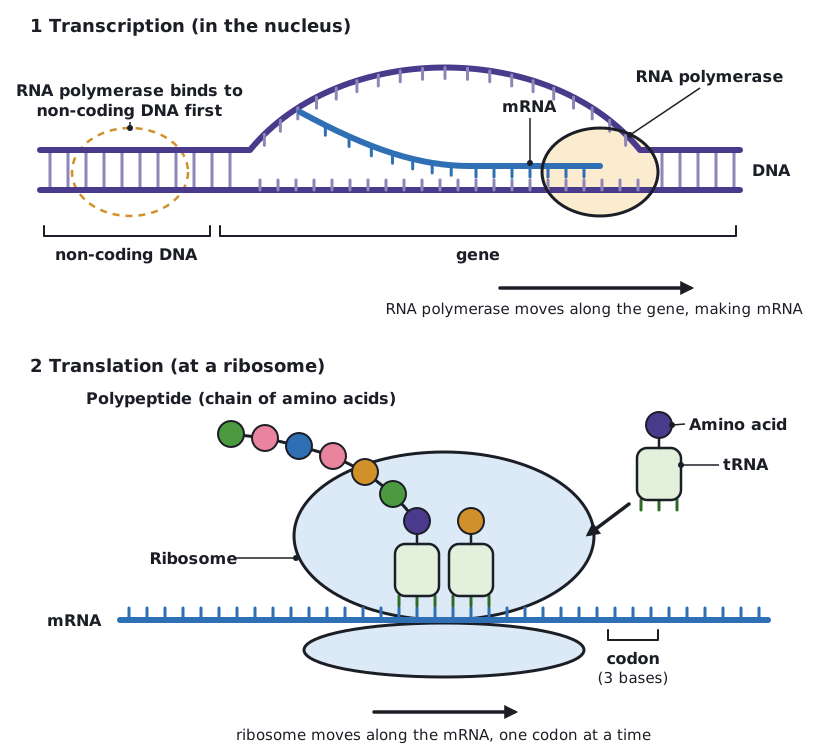
Protein synthesis has two main stages. In transcription, a copy of the gene is made as a strand of mRNA. In translation, the mRNA is used to build a polypeptide at a ribosome.
Transcription (in the nucleus)
- RNA polymerase binds to the non-coding DNA located in front of a gene.
- RNA polymerase produces a complementary mRNA strand from the coding DNA of the gene.
- The mRNA moves out of the nucleus into the cytoplasm.
Translation (at a ribosome)
- The mRNA attaches to a ribosome.
- The mRNA is read in triplets of bases called codons. Each codon codes for a specific amino acid.
- tRNA molecules transfer amino acids to the ribosome. Each tRNA carries the amino acid that matches a codon on the mRNA.
- The amino acids are linked together to form a polypeptide, which folds into a protein.
 Tap to enlarge
Genetic variants in non-coding DNASpec 3.9B
A genetic variant is a difference in the DNA sequence. Variants in the non-coding DNA in front of a gene can affect the phenotype without changing the protein itself.
- The variant is in the non-coding DNA, where RNA polymerase binds.
- This can change how well RNA polymerase binds.
- More or less mRNA is made, so the quantity of protein produced is altered.
- The change in the amount of protein can change the phenotype.
Genetic variants in coding DNASpec 3.10B
Variants in the coding DNA of a gene can change the base sequence that codes for the protein.
- A variant in the coding DNA can alter the sequence of amino acids.
- The polypeptide may then fold into a different shape.
- A protein with a different shape may have different activity. For example, an enzyme's active site may no longer fit its substrate.
- The change in the activity of the protein can affect the phenotype.
| Where the variant is | What changes | Effect on phenotype |
|---|---|---|
| Non-coding DNA in front of the gene | Binding of RNA polymerase | Quantity of protein produced is altered |
| Coding DNA of the gene | Sequence of amino acids | Activity of the protein produced is altered |
Quick check
What decides the order of amino acids in a protein?
Show answer
The order of bases in a section of DNA (the gene).
What does RNA polymerase do?
Show answer
It binds to non-coding DNA in front of a gene and produces a complementary mRNA strand from the coding DNA.
What is a codon?
Show answer
A triplet of bases in mRNA that codes for a specific amino acid.
What carries amino acids to the ribosome?
Show answer
tRNA.
How can a variant in non-coding DNA affect phenotype?
Show answer
It can change the binding of RNA polymerase and so alter the quantity of protein produced.