

Receptors and the nervous pathwaySpec 2.13
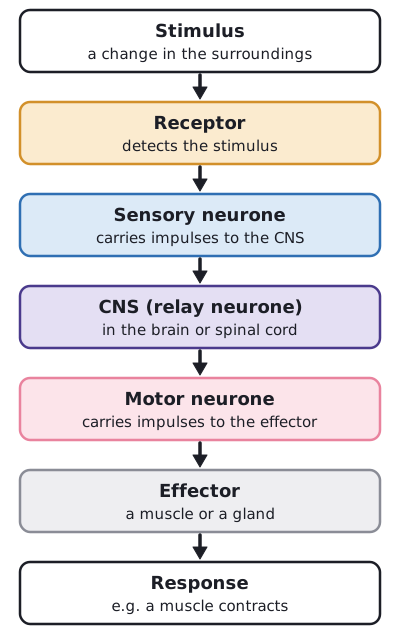
The nervous system lets an organism respond to changes in its surroundings. The brain and spinal cord make up the central nervous system (CNS). A sensory receptor is a cell that detects a stimulus (a change in the surroundings) and produces an electrical impulse.
- A sensory receptor detects a stimulus.
- A sensory neurone carries the electrical impulses to the CNS.
- A relay neurone in the CNS passes the impulses on.
- A motor neurone carries the impulses from the CNS to an effector (a muscle or a gland).
- The effector produces a response.
| Neurone | Function |
|---|---|
| Sensory neurone | Carries impulses from a receptor to the CNS |
| Relay neurone | Found in the CNS. Connects the sensory neurone to the motor neurone |
| Motor neurone | Carries impulses from the CNS to an effector |
 Tap to enlarge
Neurone structureSpec 2.13
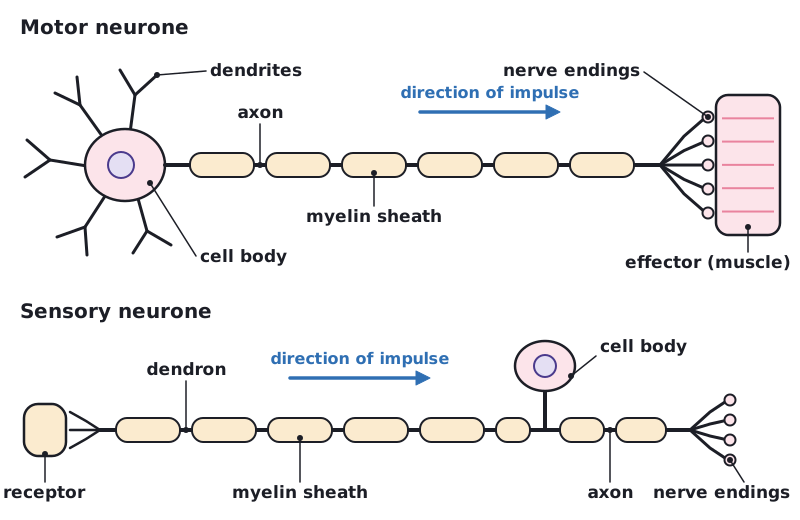
Neurones are specialised to carry electrical impulses quickly over long distances.
- Axon
- A long fibre that carries electrical impulses away from the cell body.
- Dendron
- A fibre that carries electrical impulses towards the cell body.
- Myelin sheath
- A fatty layer around the neurone that insulates it and speeds up the transmission of impulses.
 Tap to enlarge
SynapsesSpec 2.13
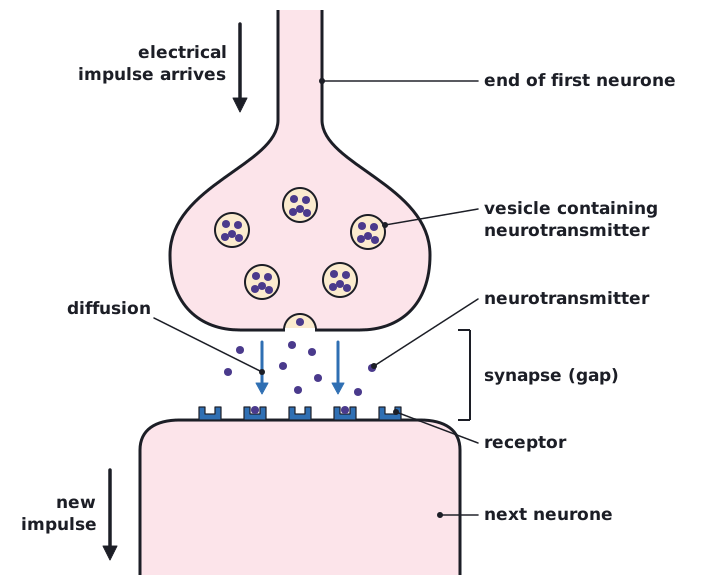
A synapse is a gap between two neurones. The electrical impulse cannot cross the gap, so a chemical is used instead.
- An electrical impulse arrives at the end of the first neurone.
- The neurone releases a chemical called a neurotransmitter into the synapse.
- The neurotransmitter diffuses across the gap.
- It binds to receptors on the membrane of the next neurone.
- This triggers a new electrical impulse in the next neurone.
 Tap to enlarge
Reflex arcsSpec 2.14
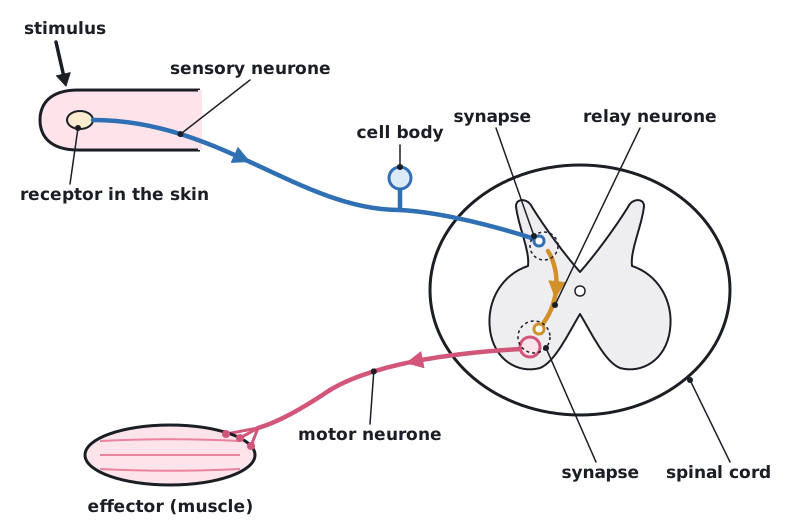
A reflex is a fast, automatic response to a stimulus that does not involve conscious thought. The pathway it follows is called a reflex arc. Reflexes protect the body from harm.
- The stimulus is detected by a receptor (for example, a pain receptor in the skin).
- A sensory neurone carries impulses to the CNS.
- At a synapse the impulses pass to a relay neurone in the CNS.
- At another synapse the impulses pass to a motor neurone.
- The motor neurone carries the impulses to an effector, such as a muscle.
- The effector produces a response, such as the muscle contracting to pull the hand away.
The impulses do not have to travel to the conscious part of the brain before the response, so the reflex is very fast.
 Tap to enlarge
Investigating reaction timesSpec 2.13, 2.14
The suggested practicals ask you to investigate human responses to external stimuli, reaction times and the speed of transmission of electrical impulses in the nervous system.
- Independent variable: the factor you change, such as hand used, practice or a distraction.
- Control variables: the same person dropping the ruler, the same ruler, the same starting position and the same person catching.
- Repeat several times and calculate a mean. This reduces the effect of random errors and lets you spot anomalous results.
- A reaction time is the time between a stimulus and a response.
Typical results: practice usually makes the response quicker, and distractions usually make it slower.
Mean distance
A student catches a ruler five times. The distances it fell were 20, 17, 15, 14 and 12 cm. Calculate the mean.
- add the results: 20 + 17 + 15 + 14 + 12 = 78
- divide by the number of results: 78 ÷ 5
Answer: 15.6 cm
Quick check
Name the three types of neurone in a reflex arc, in order.
Show answer
Sensory neurone, relay neurone, motor neurone.
What does the myelin sheath do?
Show answer
It insulates the neurone and speeds up the transmission of impulses.
What is a synapse?
Show answer
A gap between two neurones.
How does an impulse cross a synapse?
Show answer
A neurotransmitter is released, diffuses across the gap and triggers a new impulse in the next neurone.
Why are reflexes important?
Show answer
They are fast and automatic, so they protect the body from harm.