

Plant hormones, phototropism and gravitropismSpec 6.15B
Plant hormones are chemicals that control and coordinate plant growth and development. They are made in one part of the plant and move to other parts, where they change how cells grow.
A tropism is a growth response to a stimulus. A growth towards the stimulus is positive. A growth away from the stimulus is negative. Auxins are the plant hormones involved in two tropisms:
- Phototropism: growth in response to light.
- Gravitropism: growth in response to gravity.
Auxins in shoots
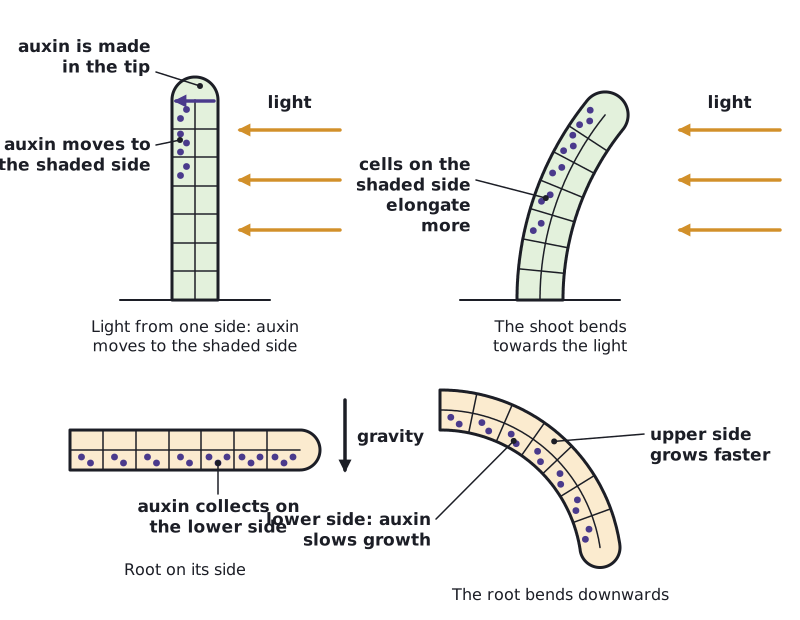
- Auxin is made in the tip of the shoot.
- When light shines from one side, auxin moves to the shaded side of the shoot.
- In shoots, auxin makes cells elongate (get longer), so the cells on the shaded side grow faster.
- The shoot bends towards the light. Shoots are positively phototropic.
If a shoot is lying on its side, auxin collects on the lower side. The cells there elongate more, so the shoot bends upwards, away from gravity. Shoots are negatively gravitropic.
Auxins in roots
Roots respond differently to auxin. In a root that is lying on its side, auxin collects on the lower side, where it slows the growth of the cells. The cells on the upper side grow faster, so the root bends downwards, in the direction of gravity. Roots are positively gravitropic. Roots also grow away from light, so they are negatively phototropic.
| Response to light | Response to gravity | |
|---|---|---|
| Shoot | Positive phototropism (grows towards light) | Negative gravitropism (grows upwards) |
| Root | Negative phototropism (grows away from light) | Positive gravitropism (grows downwards) |
 Tap to enlarge
Commercial uses of plant hormonesSpec 6.16B
Growers and farmers use plant hormones, or chemicals that act like them, to control how plants grow.
| Hormone | Use | Effect |
|---|---|---|
| Auxins | Weedkillers | Selective weedkillers make broad-leaved weeds grow too fast and uncontrollably, which kills them. Narrow-leaved crops such as cereals are not affected. |
| Auxins | Rooting powders | Cuttings dipped in the powder grow roots quickly, so new plants can be produced |
| Gibberellins | Germination | Used to end seed dormancy and make seeds germinate |
| Gibberellins | Fruit and flower formation | Used to make flowers and fruits develop |
| Gibberellins | Seedless fruit | Fruits form without being fertilised, so they contain no seeds |
| Ethene | Fruit ripening | Unripe fruit is picked, transported, and then ripened using ethene when it is needed |
Quick check
What is a tropism?
Show answer
A growth response of a plant to a stimulus.
Which hormone is involved in phototropism and gravitropism?
Show answer
Auxin.
Why does a shoot bend towards light?
Show answer
Auxin moves to the shaded side and makes those cells elongate more, so that side grows faster.
Are roots positively or negatively gravitropic?
Show answer
Positively gravitropic: they grow downwards, in the direction of gravity.