

Maintaining a constant internal environmentSpec 7.9
- Homeostasis
- Maintaining a constant internal environment in response to internal and external change.
Conditions inside the body change. Eating a meal changes blood glucose. Exercise raises body temperature. A hot or cold day changes the temperature outside. The body responds to keep the conditions inside constant.
| Condition | Example of a change |
|---|---|
| Blood glucose concentration | A meal raises it, exercise lowers it |
| Body temperature | Hot or cold surroundings, or exercise |
| Water content of the blood | Sweating, or drinking a lot |
This matters because enzymes and cells work best in a narrow range of conditions. If conditions drift too far, reactions in cells slow down or stop. Many of these controls use negative feedback.
Thermoregulation and osmoregulationSpec 7.10BTriple only
Thermoregulation: the effect on enzyme activity
Thermoregulation is the control of body temperature. Core body temperature is kept at about 37°C, which is the optimum temperature for most enzymes in the body.
- If the temperature rises too far, enzymes are denatured. The shape of the active site changes, so the substrate no longer fits and the reaction stops.
- If the temperature falls too far, enzymes work more slowly, so reactions in cells are too slow.
Osmoregulation: the effect on animal cells
Osmoregulation is the control of the water content of the blood. Animal cells have no cell wall, so water moving by osmosis changes them.
| Blood water content | Effect on animal cells |
|---|---|
| Too high (blood too dilute) | Water enters the cells by osmosis. The cells swell and may burst |
| Too low (blood too concentrated) | Water leaves the cells by osmosis. The cells shrink |
The skin and the hypothalamusSpec 7.11BTriple only
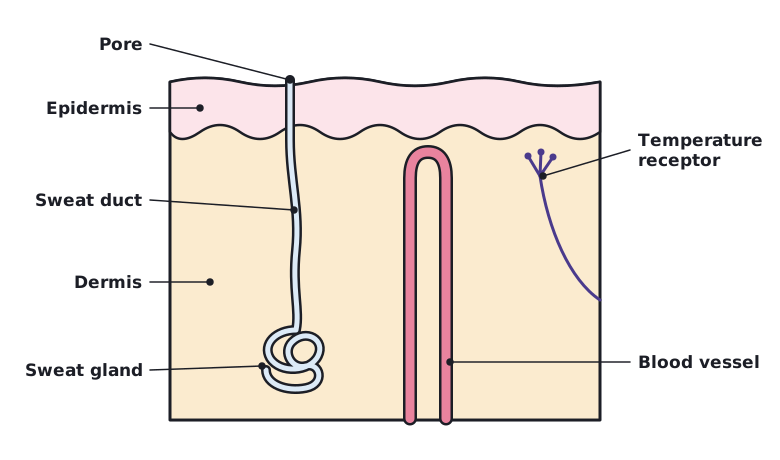
The skin has two main layers, the epidermis and the dermis. The hypothalamus in the brain is the control centre for temperature.
| Part | Role in thermoregulation |
|---|---|
| Epidermis | The thin outer layer of the skin. Sweat reaches the skin surface through pores in the epidermis, and heat is lost from the surface |
| Dermis | The layer below the epidermis. It contains the sweat glands, blood vessels that supply the skin, and temperature receptors that detect changes in skin temperature |
| Hypothalamus | Monitors the temperature of the blood and receives impulses from temperature receptors in the skin. It coordinates the response by sending nerve impulses to the effectors, such as the sweat glands, muscles and blood vessels |
 Tap to enlarge
Responses to heat and coldSpec 7.12BTriple only
When the body is too hot
- Sweat glands release sweat onto the skin. Sweat evaporates and takes heat from the skin, which cools the body.
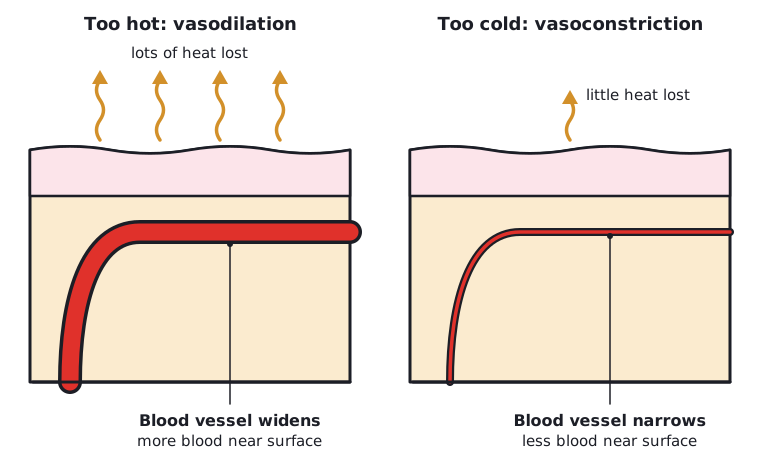
- Vasodilation: the blood vessels supplying the skin surface widen. More blood flows near the surface, so more heat is lost to the surroundings.
When the body is too cold
- Shivering: muscles contract rapidly. This needs more respiration in the muscle cells, which transfers energy as heat and warms the body.
- Vasoconstriction: the blood vessels supplying the skin surface narrow. Less blood flows near the surface, so less heat is lost.
- Sweating is reduced when the body is cold.
 Tap to enlarge
Quick check
Define homeostasis.
Show answer
Maintaining a constant internal environment in response to internal and external change.
Why does a high body temperature stop reactions in cells? (Triple only)
Show answer
Enzymes are denatured, so substrates no longer fit the active site.
What happens to animal cells if the blood is too dilute? (Triple only)
Show answer
Water enters by osmosis. The cells swell and may burst.
Which part of the brain coordinates temperature control? (Triple only)
Show answer
The hypothalamus.
How does shivering warm the body? (Triple only)
Show answer
Muscles contract rapidly. Respiration in the muscle cells transfers energy as heat.