

Aerobic and anaerobic respirationSpec 4.4.2.1
Cellular respiration is an exothermic reaction which is continuously occurring in living cells. In an exothermic reaction, energy is transferred to the surroundings. The energy transferred supplies all the energy needed for living processes.
Organisms need energy for:
- chemical reactions to build larger molecules
- movement
- keeping warm.
Respiration in cells can take place aerobically (using oxygen) or anaerobically (without oxygen), to transfer energy.
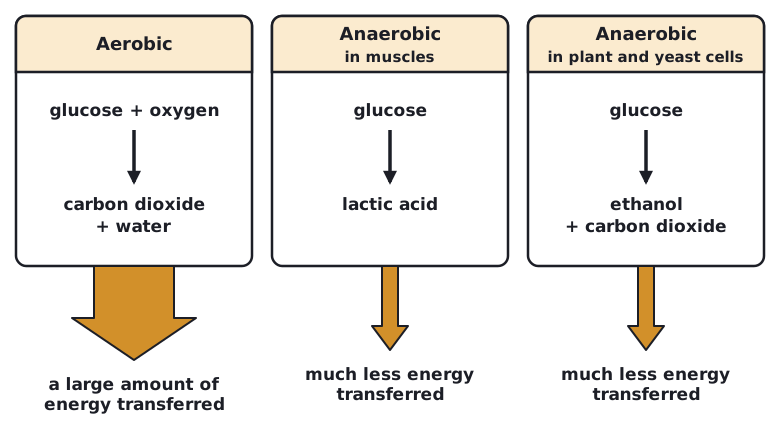
Aerobic respiration
Anaerobic respiration in muscles
As the oxidation of glucose is incomplete in anaerobic respiration, much less energy is transferred than in aerobic respiration.
Anaerobic respiration in plant and yeast cells
Anaerobic respiration in yeast cells is called fermentation. It has economic importance in the manufacture of bread and alcoholic drinks.
| Aerobic | Anaerobic (muscles) | Anaerobic (plant and yeast cells) | |
|---|---|---|---|
| Oxygen needed? | Yes | No | No |
| Products | Carbon dioxide and water | Lactic acid | Ethanol and carbon dioxide |
| Energy transferred | A large amount, as glucose is completely oxidised | Much less, as glucose is only partly oxidised | Much less, as glucose is only partly oxidised |
 Tap to enlarge
Response to exerciseSpec 4.4.2.2
During exercise the human body reacts to the increased demand for energy. The heart rate, breathing rate and breath volume increase during exercise to supply the muscles with more oxygenated blood. This brings more oxygen and glucose to the muscles for respiration.
If insufficient oxygen is supplied, anaerobic respiration takes place in muscles. The incomplete oxidation of glucose causes a build-up of lactic acid and creates an oxygen debt. During long periods of vigorous activity, muscles become fatigued and stop contracting efficiently.
- Exercise increases the demand for energy in the muscles.
- Heart rate, breathing rate and breath volume increase, so more oxygenated blood reaches the muscles.
- If the oxygen supply is still not enough, muscles respire anaerobically.
- Glucose is only partly oxidised, so lactic acid builds up and an oxygen debt is created.
- After long vigorous activity, muscles become fatigued and stop contracting efficiently.
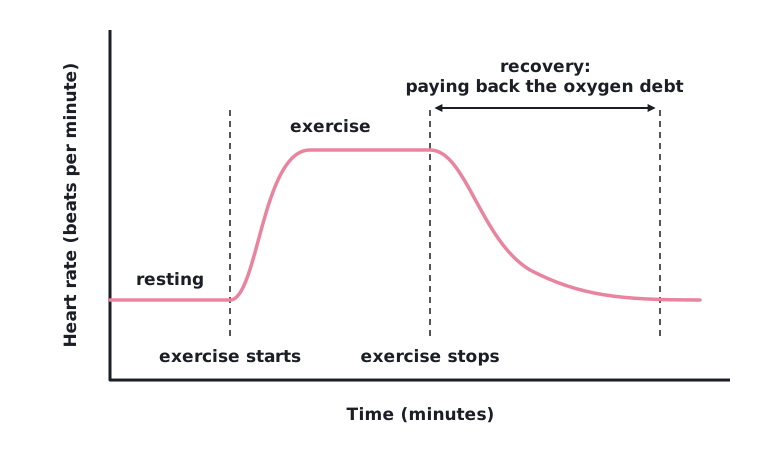
Removing lactic acid and the oxygen debt
Blood flowing through the muscles transports the lactic acid to the liver, where it is converted back into glucose.
Oxygen debt is the amount of extra oxygen the body needs after exercise to react with the accumulated lactic acid and remove it from the cells. This is why you keep breathing hard, and your heart rate stays high, for a while after you stop.
 Tap to enlarge
MetabolismSpec 4.4.2.3
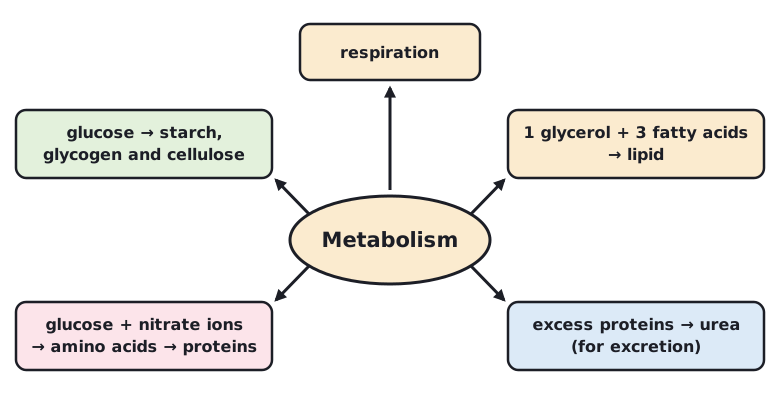
Metabolism is the sum of all the reactions in a cell or the body.
The energy transferred by respiration in cells is used by the organism for the continual enzyme controlled processes of metabolism that synthesise new molecules.
Metabolism includes:
- conversion of glucose to starch, glycogen and cellulose
- the formation of lipid molecules from a molecule of glycerol and three molecules of fatty acids
- the use of glucose and nitrate ions to form amino acids, which in turn are used to synthesise proteins
- respiration
- breakdown of excess proteins to form urea for excretion.
| Large molecule | Made from (synthesis) | Broken down into (breakdown) |
|---|---|---|
| Carbohydrates (starch, glycogen, cellulose) | Sugars such as glucose | Sugars |
| Proteins | Amino acids | Amino acids |
| Lipids | One glycerol and three fatty acids | Fatty acids and glycerol |
So sugars, amino acids, fatty acids and glycerol are the building blocks used to make carbohydrates, proteins and lipids, and the molecules that those large molecules are broken down into.
All of these aspects are covered in more detail in the relevant specification sections but are linked together here.
 Tap to enlarge
Quick check
Write the word equation for aerobic respiration.
Show answer
glucose + oxygen → carbon dioxide + water
What are the products of anaerobic respiration in yeast?
Show answer
Ethanol and carbon dioxide.
Why does anaerobic respiration transfer much less energy than aerobic respiration?
Show answer
Because the oxidation of glucose is incomplete.
Name the three things that increase during exercise to supply muscles with more oxygenated blood.
Show answer
Heart rate, breathing rate and breath volume.
What is metabolism?
Show answer
The sum of all the reactions in a cell or the body.