

Structures and functions of the brainSpec 2.10B
The brain is part of the central nervous system. Different regions have different functions.
| Region | Function |
|---|---|
| Cerebral hemispheres | The left and right halves of the largest part of the brain. They are involved in conscious thought, intelligence, memory and language. |
| Cerebellum | Coordinates movement and helps to control balance. |
| Medulla oblongata | Controls unconscious activities, such as heart rate and breathing rate. |
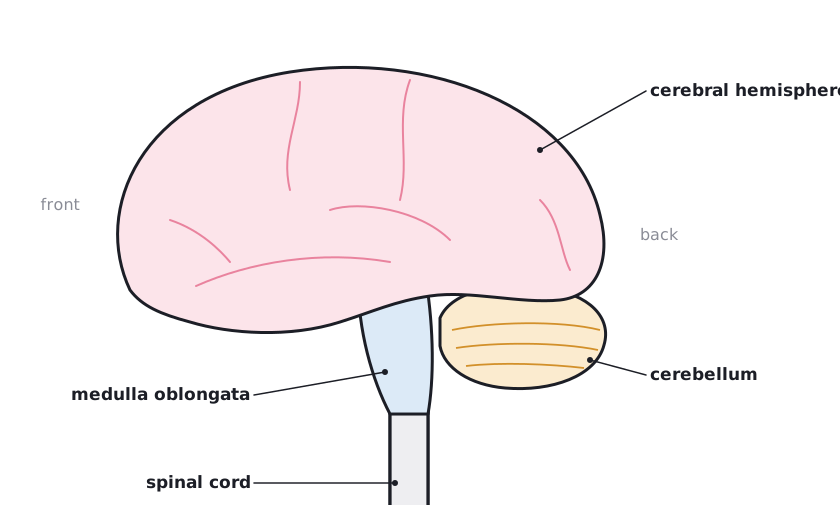 Tap to enlarge
Investigating the brain with scansSpec 2.11B
The brain is inside the skull and is very delicate. It is difficult and risky to get at brain tissue to find out how it works or what is wrong. Scanning allows doctors to investigate the brain without surgery.
| Scan | How it helps |
|---|---|
| CT scan | Uses X-rays taken from many angles to build up images of the brain. It shows the structure, so it can reveal damage or a tumour. |
| PET scan | A radioactive tracer is put into the body. Active areas of the brain use more of it, so the scan shows which areas are active. It shows brain function. |
Both methods let scientists and doctors link areas of the brain to their functions and find the cause of problems, without opening the skull.
Limitations in treating nervous system damageSpec 2.12B
Treating damage and disease in the brain and other parts of the nervous system is difficult.
- The brain is complex and delicate, and it is difficult to reach inside the skull. Surgery risks damaging healthy tissue.
- Neurones in the central nervous system do not easily repair themselves, so damage is often permanent.
- In a spinal injury, the spinal cord is damaged, so impulses cannot pass the damaged region. This can cause paralysis and loss of feeling below the injury. The damage is very difficult to repair.
- A brain tumour may be in a place where it cannot be removed safely. Treatments may also damage healthy brain tissue around it.
Quick check
What does the cerebellum do?
Show answer
It coordinates movement and helps to control balance.
What does the medulla oblongata control?
Show answer
Unconscious activities such as heart rate and breathing rate.
Name one function of the cerebral hemispheres.
Show answer
Any one of: consciousness, intelligence, memory, language.
Which part of the brain would be involved in learning a new language?
Show answer
The cerebral hemispheres.