

Detection and identification of plant diseasesSpec 4.3.3.1
Detecting plant disease
Plant diseases can be detected by:
- stunted growth
- spots on leaves
- areas of decay (rot)
- growths
- malformed stems or leaves
- discolouration
- the presence of pests.
Identifying plant disease
Identification can be made by:
- reference to a gardening manual or website
- taking infected plants to a laboratory to identify the pathogen
- using testing kits that contain monoclonal antibodies.
Plant pathogens and pests
Plants can be infected by a range of viral, bacterial and fungal pathogens as well as by insects. Your knowledge of plant diseases is restricted to:
- tobacco mosaic virus as a viral disease
- black spot as a fungal disease
- aphids as insects. Aphids are insect pests that feed on plants.
Ion deficiency conditions
Plants can be damaged by a range of ion deficiency conditions.
| Ion missing | Why the plant needs it | Effect on the plant |
|---|---|---|
| Nitrate | Needed for protein synthesis, and therefore growth | Stunted growth |
| Magnesium | Needed to make chlorophyll | Chlorosis (yellow leaves) |
Knowing about ion deficiencies allows horticulturists to provide the optimum conditions for plants. Your knowledge of ions is limited to nitrate and magnesium.
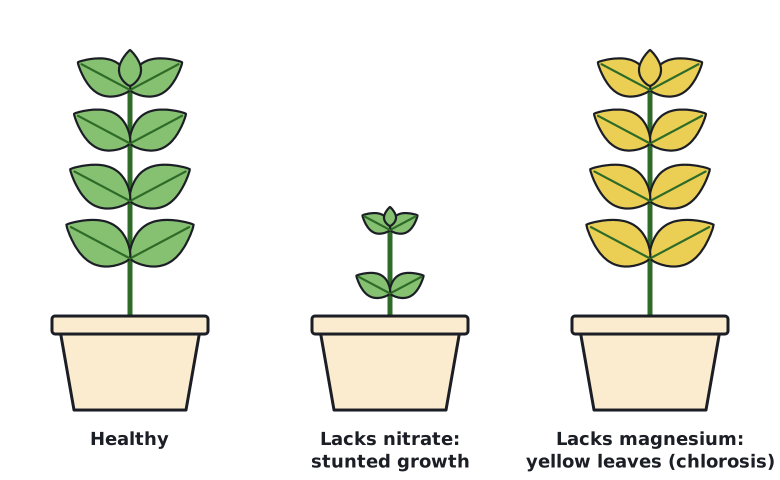 Tap to enlarge
Plant defence responsesSpec 4.3.3.2
Plants have defences that resist the invasion of microorganisms and deter animals that might eat them. You need to be able to describe physical and chemical responses, and mechanical adaptations.
| Type | Examples |
|---|---|
| Physical defences against microorganisms | Cellulose cell walls; a tough waxy cuticle on leaves; layers of dead cells around stems (bark on trees) which fall off |
| Chemical defences | Antibacterial chemicals; poisons to deter herbivores |
| Mechanical adaptations | Thorns and hairs deter animals; leaves which droop or curl when touched; mimicry to trick animals |
Layers of dead cells around the stem, such as bark, act as a barrier. They fall off, which helps to remove any pathogens that have settled on them.
Mimicry means looking like something else so that animals are tricked, for example into avoiding the plant.
Quick check
Which ion deficiency causes stunted growth, and why?
Show answer
Nitrate. Nitrate ions are needed for protein synthesis and therefore growth.
Which ion deficiency causes chlorosis?
Show answer
Magnesium, because magnesium ions are needed to make chlorophyll.
Name three physical plant defences.
Show answer
Cellulose cell walls, a tough waxy cuticle on leaves, and layers of dead cells around stems.
Give two mechanical adaptations of plants.
Show answer
Any two of: thorns and hairs, leaves that droop or curl when touched, mimicry.