

Producing monoclonal antibodiesSpec 4.3.2.1
Monoclonal antibodies are produced from a single clone of cells. The antibodies are specific to one binding site on one protein antigen, so they are able to target a specific chemical or specific cells in the body.
An antigen is a molecule that an antibody can bind to. Lymphocytes are a type of white blood cell that make antibodies.
Making monoclonal antibodies
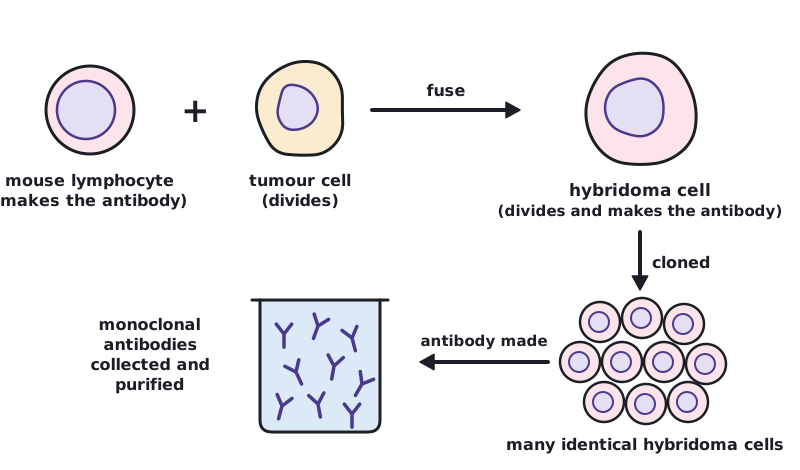
- Mouse lymphocytes are stimulated to make a particular antibody.
- The lymphocytes are combined with a particular kind of tumour cell to make a hybridoma cell.
- The hybridoma cell can both divide and make the antibody.
- Single hybridoma cells are cloned to produce many identical cells that all produce the same antibody.
- A large amount of the antibody can be collected and purified.
- Hybridoma cell
- A cell made by combining a lymphocyte with a tumour cell. It can both divide and make the antibody.
- Monoclonal antibody
- An antibody produced from a single clone of cells, specific to one binding site on one protein antigen.
 Tap to enlarge
Uses of monoclonal antibodiesSpec 4.3.2.2
Because each monoclonal antibody binds to one specific antigen, it can be used to find or target one chemical or cell type. Some examples are:
- Diagnosis, such as in pregnancy tests. The antibody binds to a hormone in the urine, which causes a visible change.
- In laboratories, to measure the levels of hormones and other chemicals in blood, or to detect pathogens.
- In research, to locate or identify specific molecules in a cell or tissue by binding to them with a fluorescent dye.
- To treat some diseases.
Treating cancer
For cancer, the monoclonal antibody can be bound to a radioactive substance, a toxic drug or a chemical which stops cells growing and dividing. The antibody delivers the substance to the cancer cells without harming other cells in the body.
You are not expected to recall specific tests or treatments. Given appropriate information, you should be able to explain how they work: the antibody binds only to its specific antigen, so it carries the substance or label to exactly the right place.
Advantages and disadvantages
| Advantage | Disadvantage |
|---|---|
| Very specific: they target one chemical or one type of cell | They create more side effects than expected |
| In cancer treatment, they can deliver a drug or radioactive substance to cancer cells without harming other cells | They are not yet as widely used as everyone hoped when they were first developed |
The power of monoclonal antibodies raises ethical issues too. They are produced using mice, which some people object to.
Quick check
What does 'monoclonal' mean?
Show answer
Produced from a single clone of cells.
Which two kinds of cell are combined to make a hybridoma cell?
Show answer
A mouse lymphocyte and a tumour cell.
Why can a monoclonal antibody target specific cells?
Show answer
It is specific to one binding site on one protein antigen.
Give two uses of monoclonal antibodies.
Show answer
Any two of: diagnosis such as pregnancy tests, measuring hormones or detecting pathogens in the lab, locating molecules in research, treating diseases such as cancer.