

Communicable (infectious) diseasesSpec 4.3.1.1
Pathogens are microorganisms that cause infectious disease. Pathogens may be viruses, bacteria, protists or fungi. They may infect plants or animals.
Pathogens depend on their host to provide the conditions and nutrients they need to grow and reproduce.
How pathogens spread
Pathogens can be spread by direct contact, by water or by air.
| Route | Examples |
|---|---|
| Direct contact | HIV (sexual contact, exchange of body fluids such as blood); gonorrhoea (sexual contact) |
| Water | Rose black spot in plants (spread in the environment by water) |
| Air | Measles (inhaling droplets from sneezes and coughs); rose black spot (spread by wind) |
| Other routes in the spec | Salmonella (in food, or on food prepared in unhygienic conditions); malaria (carried by mosquitos) |
How pathogens make us ill
- Bacteria and viruses may reproduce rapidly inside the body.
- Bacteria may produce poisons called toxins that damage tissues and make us feel ill.
- Viruses live and reproduce inside cells, causing cell damage.
Reducing or preventing the spread
To explain how spread can be reduced, link the method to the way the disease is passed on.
- Good hygiene, such as washing hands and preparing food hygienically, reduces spread by contact and in food.
- Covering the mouth and nose when coughing or sneezing, and keeping infected people away from others, reduces spread through the air.
- Vaccination prevents people from becoming infected.
- Controlling vectors, such as stopping mosquitos from breeding, and avoiding bites reduces the spread of malaria.
- Barrier contraception (a condom) and not sharing needles reduce the spread of sexually transmitted and blood-borne diseases.
- Treating infected people, for example with antibiotics for gonorrhoea, reduces the chance of them passing the pathogen on.
- In plants, destroying infected leaves and using fungicides reduce the spread of fungal disease.
- Pathogen
- A microorganism that causes infectious disease.
- Toxin
- A poison produced by bacteria that damages tissues and makes us feel ill.
Viral diseasesSpec 4.3.1.2
Measles
Measles is a viral disease. The symptoms are a fever and a red skin rash. It is spread by inhalation of droplets from sneezes and coughs.
Measles is a serious illness that can be fatal if complications arise. For this reason most young children are vaccinated against measles.
HIV
HIV initially causes a flu-like illness. Unless successfully controlled with antiretroviral drugs, the virus attacks the body's immune cells.
Late stage HIV infection, or AIDS, happens when the immune system becomes so badly damaged that it can no longer deal with other infections or cancers.
HIV is spread by sexual contact or by the exchange of body fluids such as blood, which happens when drug users share needles.
Tobacco mosaic virus (TMV)
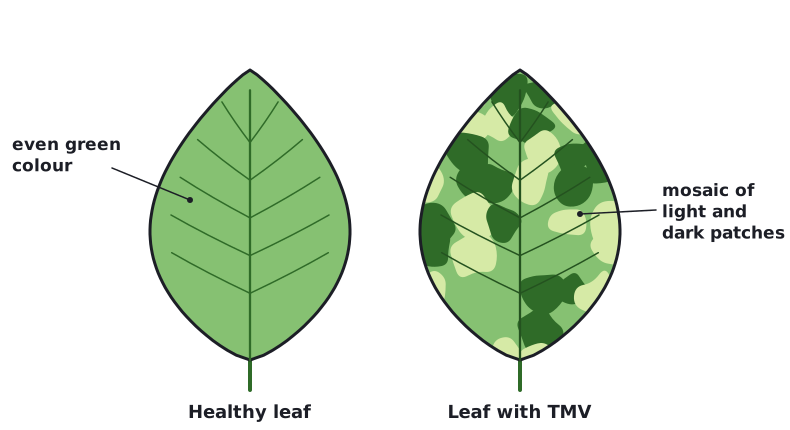
TMV is a widespread plant pathogen. It affects many species of plants, including tomatoes.
It gives a distinctive mosaic pattern of discolouration on the leaves. This affects the growth of the plant because there is less photosynthesis.
 Tap to enlarge
Bacterial diseasesSpec 4.3.1.3
Salmonella food poisoning
Salmonella food poisoning is spread by bacteria ingested in food, or on food prepared in unhygienic conditions.
The fever, abdominal cramps, vomiting and diarrhoea are caused by the bacteria and the toxins they secrete.
In the UK, poultry are vaccinated against Salmonella to control the spread.
Gonorrhoea
Gonorrhoea is a sexually transmitted disease (STD) caused by a bacterium. The symptoms are a thick yellow or green discharge from the vagina or penis, and pain on urinating.
It was easily treated with the antibiotic penicillin until many resistant strains appeared. It is spread by sexual contact.
The spread can be controlled by treatment with antibiotics or by using a barrier method of contraception such as a condom.
| Salmonella food poisoning | Gonorrhoea | |
|---|---|---|
| Spread by | Eating contaminated food, or food prepared in unhygienic conditions | Sexual contact |
| Symptoms | Fever, abdominal cramps, vomiting, diarrhoea | Thick yellow or green discharge; pain on urinating |
| Control | Vaccinating poultry in the UK | Antibiotics; barrier contraception such as a condom |
Fungal diseasesSpec 4.3.1.4
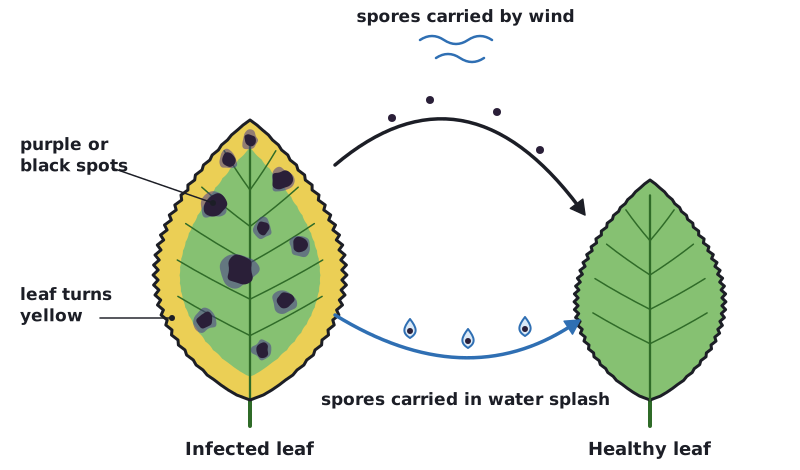
Rose black spot is a fungal disease of plants. Purple or black spots develop on the leaves, which often turn yellow and drop early.
It affects the growth of the plant because photosynthesis is reduced. Less photosynthesis means less glucose is made for growth.
It is spread in the environment by water or wind.
Treatment
- Using fungicides.
- Removing and destroying the affected leaves.
 Tap to enlarge
Protist diseasesSpec 4.3.1.5
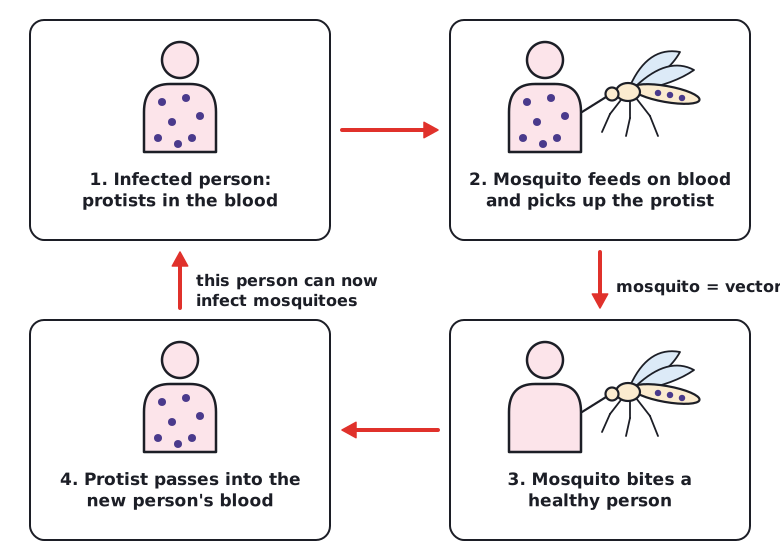
The pathogens that cause malaria are protists. The malarial protist has a life cycle that includes the mosquito.
Malaria causes recurrent episodes of fever and can be fatal.
How malaria spreads
The mosquito is a vector: an organism that carries a pathogen from one host to another. A mosquito picks up the protist when it feeds on the blood of an infected person. It passes the protist on when it bites another person.
Controlling malaria
- Prevent the vectors, the mosquitos, from breeding.
- Use mosquito nets to avoid being bitten.
- Vector
- An organism that carries a pathogen from one host to another. For malaria the vector is the mosquito.
 Tap to enlarge
Human defence systemsSpec 4.3.1.6
Non-specific defences
These defences are the same whatever the pathogen. They stop pathogens getting into the body, or kill them before they can cause infection.
| Defence | How it protects |
|---|---|
| Skin | Acts as a physical barrier to pathogens and secretes substances that kill them. |
| Nose | Hairs and mucus trap particles, including pathogens, in the air you breathe in. |
| Trachea and bronchi | Lined with mucus that traps pathogens and cilia (tiny hairs) that move the mucus up to the throat, where it is swallowed. |
| Stomach | Produces hydrochloric acid, which kills pathogens that are swallowed with food, drink or mucus. |
The immune system
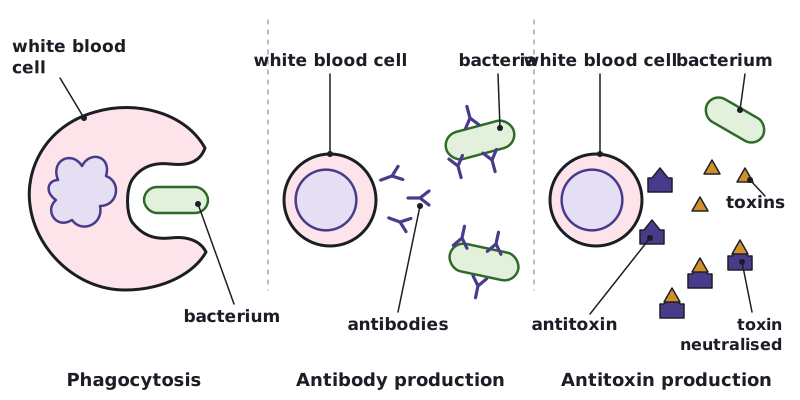
If a pathogen enters the body, the immune system tries to destroy it. White blood cells help to defend against pathogens in three ways.
- Phagocytosis: a white blood cell engulfs the pathogen and digests it.
- Antibody production: white blood cells make antibodies that target a particular pathogen and help to destroy it.
- Antitoxin production: white blood cells make antitoxins that neutralise the toxins released by pathogens.
 Tap to enlarge
VaccinationSpec 4.3.1.7
Vaccination involves introducing small quantities of dead or inactive forms of a pathogen into the body. This stimulates the white blood cells to produce antibodies.
How it protects an individual
- A vaccine containing dead or inactive pathogen is given.
- The white blood cells are stimulated to produce antibodies.
- If the same pathogen re-enters the body later, the white blood cells respond quickly to produce the correct antibodies.
- The pathogen is destroyed, preventing infection and illness.
How it protects a population
If a large proportion of the population is immunised, the pathogen cannot spread easily because most people it reaches are protected. People who have not been vaccinated are less likely to come into contact with an infected person. This is sometimes called herd immunity.
Evaluating the global use of vaccination
You may be given data, such as the number of cases of a disease against the percentage of people vaccinated, and asked to evaluate. Describe the trend, then link it to the idea above: more people vaccinated means fewer cases.
- Benefit: prevents illness in individuals and reduces the spread of disease through the population.
- Benefit: protects even people who have not been vaccinated, if enough people are immunised.
- Limitation: it is only effective if a large proportion of the population is immunised.
- Limitation: if the proportion of people vaccinated falls, the disease can spread again and cases rise.
Percentage vaccinated
In a town of 8000 people, 6800 have been vaccinated. Calculate the percentage of the population that is vaccinated.
- number vaccinated ÷ total population = 6800 ÷ 8000 = 0.85
- 0.85 × 100 = 85
Answer: 85%
You do not need to know vaccination schedules or the side effects of specific vaccines.
Antibiotics and painkillersSpec 4.3.1.8
Antibiotics, such as penicillin, are medicines that help to cure bacterial disease by killing infective bacteria inside the body.
It is important that specific bacteria are treated by specific antibiotics.
The use of antibiotics has greatly reduced deaths from infectious bacterial diseases. However, the emergence of strains resistant to antibiotics is of great concern.
What antibiotics cannot do
- Antibiotics cannot kill viral pathogens.
- It is difficult to develop drugs that kill viruses without also damaging the body's tissues, because viruses live and reproduce inside cells.
Painkillers
Painkillers and other medicines are used to treat the symptoms of disease but do not kill pathogens.
| Antibiotics | Painkillers | |
|---|---|---|
| What they do | Kill bacteria inside the body | Treat symptoms such as pain |
| Do they kill pathogens? | Yes, bacteria only | No |
| Work on viruses? | No | They do not kill them, but can ease symptoms |
Discovery and development of drugsSpec 4.3.1.9
Where drugs come from
Traditionally, drugs were extracted from plants and microorganisms.
- The heart drug digitalis originates from foxgloves.
- The painkiller aspirin originates from willow.
- Penicillin was discovered by Alexander Fleming from the Penicillium mould.
Most new drugs are synthesised by chemists in the pharmaceutical industry. However, the starting point may still be a chemical extracted from a plant.
Testing and trialling
New medical drugs have to be tested and trialled before being used, to check that they are safe and effective. They are extensively tested for:
- Toxicity
- How harmful the drug is to cells and the body.
- Efficacy
- How well the drug works to treat the condition.
- Dose
- The amount of drug to give so that it works without causing harm.
- Preclinical testing is done in a laboratory using cells, tissues and live animals.
- Clinical trials use healthy volunteers and patients.
- Very low doses of the drug are given at the start of the clinical trial.
- If the drug is found to be safe, further clinical trials are carried out to find the optimum dose.
- In double blind trials, some patients are given a placebo.
A placebo looks like the drug but contains no active drug. In a double blind trial, neither the patients nor the doctors know who has the real drug and who has the placebo until the end. This stops expectations affecting the results.
Peer review
The results of testing and trials are published only after scrutiny by peer review. Other scientists check the methods and conclusions before they are published.
Quick check
Name the four types of pathogen.
Show answer
Viruses, bacteria, protists and fungi.
Name the three ways white blood cells defend against pathogens.
Show answer
Phagocytosis, antibody production and antitoxin production.
Why can antibiotics not be used to treat a viral disease?
Show answer
Antibiotics cannot kill viral pathogens.
What does a vaccine contain?
Show answer
Small quantities of dead or inactive forms of a pathogen.
Where is preclinical testing carried out, and on what?
Show answer
In a laboratory, using cells, tissues and live animals.